




- Your cart is empty Browse Shop
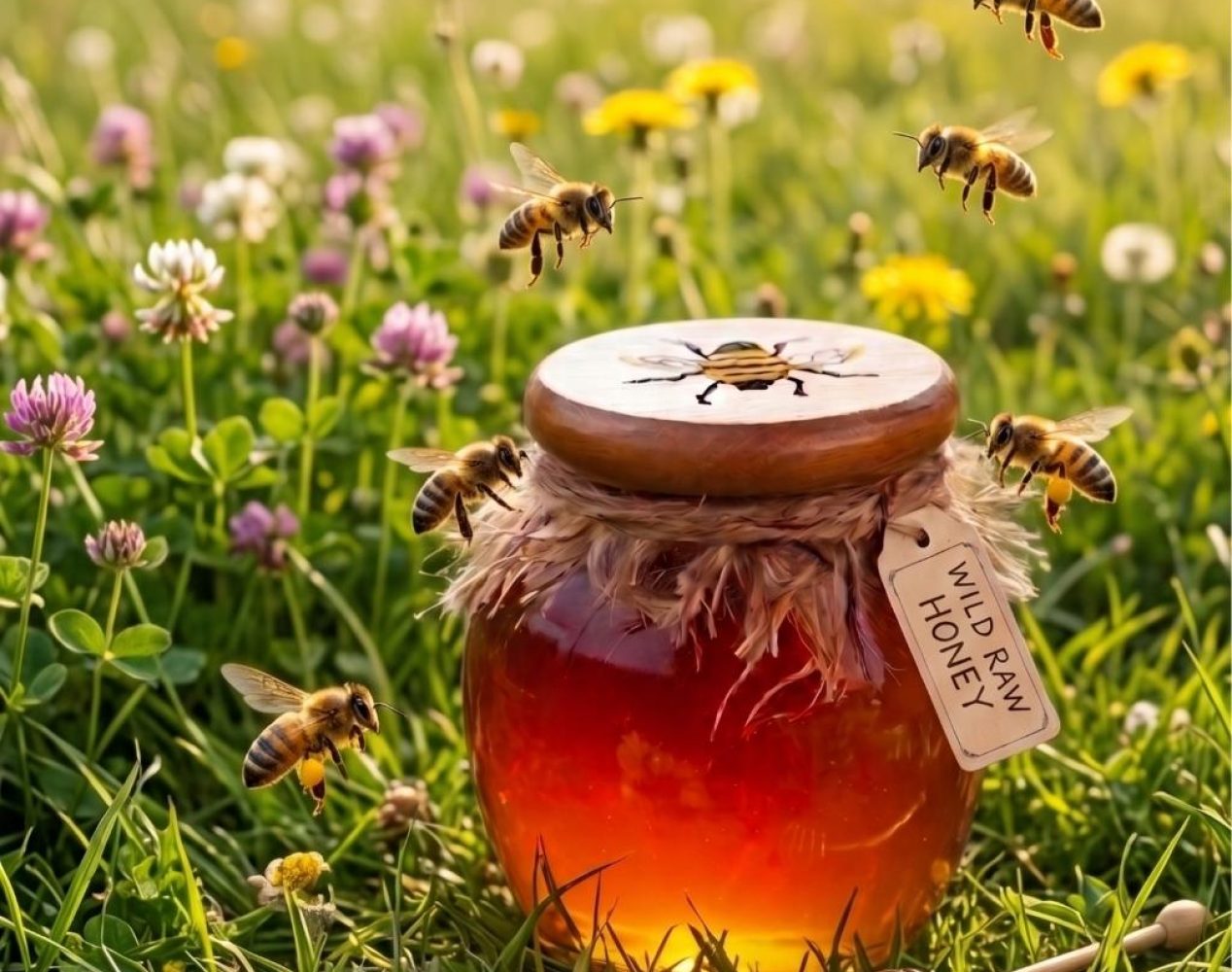
Deep in the pristine, high-altitude forests of Himachal Pradesh lies a natural treasure far removed from the commercial honeys found on supermarket shelves. Here, amidst the dense groves of deodar, pine, and oak, wild honey is crafted not in man-made apiaries, but on the precarious ledges of steep Himalayan cliffs and deep within the hollows of ancient trees.
A Tapestry of High-Altitude Flora
The secret to this wild honey’s extraordinary profile lies in its source. The giant Himalayan cliff bee (Apis dorsata laboriosa), one of the largest honey bees in the world, forages across valleys carpeted with diverse, uncultivated alpine flora. The bees draw nectar from rhododendrons, wild herbs, and a myriad of medicinal mountain plants. Because the bees’ foraging is entirely unrestricted, each batch captures the specific botanical signature of that season and location.
Flavor, Texture, and Aroma
Raw Himalayan honey is a sensory experience. Unlike the single-note sweetness of processed varieties, wild honey boasts a complex, robust profile:
Aroma: Deeply earthy and woody, often carrying the subtle, herbaceous scent of the forest floor and blooming mountain wildflowers.
Texture: Thick, viscous, and occasionally crystallized. Because it is completely unheated and unfiltered, it retains microscopic particles of pollen, propolis, and beeswax, giving it a rich, opaque, and slightly textured mouthfeel.
Flavor: It delivers a bold, multi-layered sweetness with distinct earthy undertones. Depending on the season’s bloom, it may carry a sharp, slightly bitter finish or a deeply malty molasses flavor, reflecting the wild medicinal plants of the region.
The Perilous Art of the Harvest
The collection of this honey is an ancient and dangerous art, passed down through generations of indigenous honey hunters. Twice a year, these harvesters trek deep into the forests, braving steep inclines and unpredictable weather.
Suspended on hand-woven bamboo rope ladders hundreds of feet above the ground, the hunters use bundles of smoldering leaves to create a gentle smoke that calms the bees. With precise, traditional tools, they carefully slice sections of the massive combs away, catching them in woven baskets below. This process is deeply respectful; hunters take only what is needed, leaving enough comb for the colony to survive and rebuild, ensuring the ecosystem remains balanced.
Purity and Ayurvedic Significance
Because it is harvested deep within untouched forests, this honey is completely free from agricultural pesticides and pollutants. In its raw form, it acts as a potent reservoir of natural enzymes, antioxidants, and local pollen.
In traditional wellness practices, particularly within Ayurveda, raw, unprocessed mountain honey holds immense cultural and medicinal value. It is highly regarded as a Yogavahi—a natural catalyst or bio-enhancer that carries the properties of herbs deep into the body’s tissues. Used therapeutically in practices ranging from digestion support to topical skin healing, its untouched state is considered vital for preserving its Prana (life force). It is not merely a sweetener, but a revered natural medicine, directly connecting the vitality of the Himalayan forests to human health.